The Roses I Never Would Have Planted
It All Begins Here
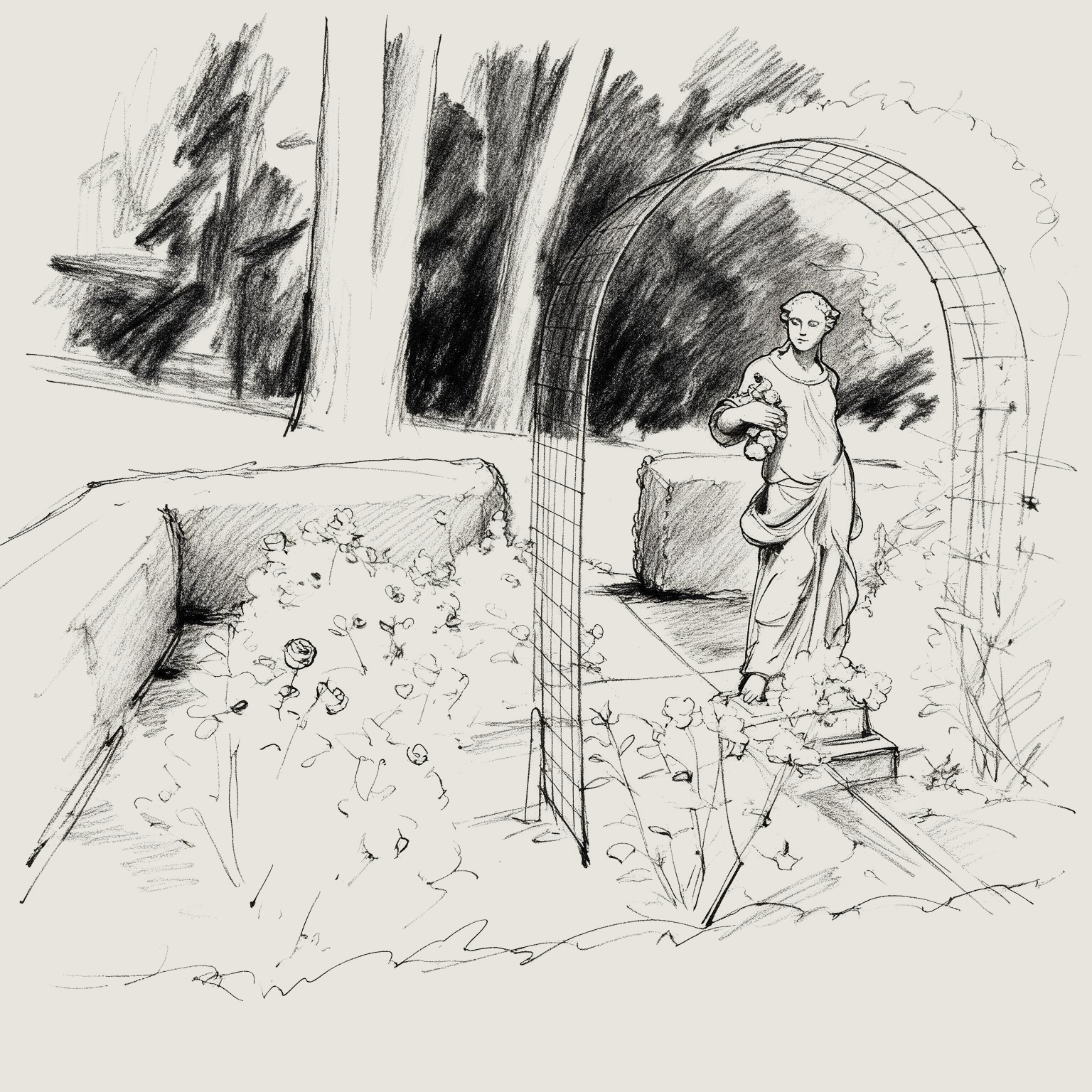
When we bought our house, there was already a rose garden just outside the kitchen. I knew almost immediately that it probably wasn’t going to stay there forever. None of the roses were varieties I would have chosen myself, the whole bed felt a little arbitrary, and the plants were struggling. More importantly, the location seemed too useful. It gets good sun, it is right outside the kitchen, and I could very easily imagine a vegetable garden there instead.
That is still the plan.
But when we moved in there were plenty of other things going on with the house, and the garden was not the first project we were going to take on. We decided pretty early that, for the first year, it mostly needed maintenance and observation. We would deal with the bigger changes in the spring once we had actually lived with the property for a while.
In the meantime, Mulligan and I got into a routine of going outside in the mornings with my coffee. She is our dog, and she is especially interested in the bees. She gets her face far closer to them than seems sensible, but she is strangely gentle about it. Mostly she just seems fascinated by what they are doing, following them from flower to flower and sticking her nose into whatever they are working on.
I started paying attention too.
At first it was just because I was already outside. I would pull some weeds or cut out a dead branch, then I started pruning the roses and feeding them. I figured out which ones were struggling more than the others, which were getting eaten, which had healthier new growth coming from the base. It was not really a rescue mission. I was not trying to convince myself that I loved the rose garden. It was simply there, and for the time being I was responsible for it.
Somewhere along the way, though, the roses started doing better.
Now, just as summer is starting to turn, they are having this incredible last bloom. The plants that looked pretty miserable when we arrived are full again, and the timing makes it hard not to pay attention. Everything else in the garden is beginning to show that the season is winding down and the roses seem to have decided to make one more attempt.
I still wouldn’t plant them.
That is the part I find interesting.
I had expected that taking care of them might change my mind about the garden, that there would be some neat little lesson where I discovered that the previous owner had been right all along and the roses would stay forever. That hasn’t happened. I still want vegetables outside the kitchen. I still think I can make better use of that space.
What changed was not really my taste. It was my judgment.
Taste tends to happen pretty quickly. You know what you are drawn to and what you aren’t. In design, that kind of immediate judgment is useful and, honestly, unavoidable. I walk onto a client’s property and start doing it almost immediately. This tree is important. That shrub probably goes. This edge needs to loosen up. That view should open. This feels too formal, that feels too empty.
You need instincts like that. But gardens make those instincts a little less reliable because the thing you are judging never stays still.
A plant that looks hopeless in April may turn out to be great in September. A shrub that seems like dead weight in summer may be the thing holding the garden together in winter. An old hedge may be wrong for the space, or it may simply look terrible because nobody has maintained it properly in fifteen years. When you first arrive, neglect and failure can look very similar.
Time helps separate them.
That has become one of the more useful lessons of this garden for me. Not that the first judgment is necessarily wrong, but that it is incomplete. You can look at a plant for ten minutes and know whether you like it. It takes longer to know what it does.
I think that is why I have been thinking about Mierle Laderman Ukeles and her work around maintenance. In the late 1960s she began questioning the way we separate the creative act of making something from the repetitive work required to keep it going. We tend to treat the first as important and the second as background. The artist makes. Someone else cleans, repairs, maintains.
A garden makes that distinction feel pretty flimsy.
Planting something is one decision. Gardening is everything that follows.
You water it. Prune it. Move it. Cut it back when it gets too large. Watch it get sick. Figure out what is eating it. Sometimes you nurse it back and sometimes you finally give up. The design may begin with choosing a plant, but the relationship with it develops through care.
I didn’t choose these roses, which means almost my entire relationship with them came through maintenance. There was no pleasure of finding the variety at a nursery, imagining it in the garden, planting it and watching my idea take shape. They were someone else’s idea. I just inherited the work.
And weirdly, doing the work made them matter more.
Not enough to become sacred. Not enough that I now think they should dictate the future of the garden. They just stopped feeling disposable.
At one point I assumed that when the vegetable garden went in, I would pull them out and that would be the end of it. Now I think I will probably try to transplant them somewhere else, or give some of them away. Maybe they survive. Maybe some don’t. I don’t think I will be devastated if one dies in the move.
But at one point they weren’t going to have a life after this garden at all.
That is a pretty big change for something I still don’t particularly want in its current location.
I see some version of this with clients all the time. Someone buys a property and understandably wants to make it theirs. Sometimes the garden has been neglected, sometimes it simply reflects the taste of another person, and sometimes there are things the new owner dislikes immediately. The impulse is to clear away the old decisions so that the new work can begin.
Sometimes that is absolutely the right thing to do.
But I am increasingly interested in what happens if certain decisions wait a little.
An old lilac flowers and suddenly you understand why someone kept it. A hedge responds to pruning. A tree that did almost nothing for you in June changes the entire garden in October. Or maybe you wait a year and still dislike the thing. That happens too. At least then the decision is based on more than the first impression.
This is where the idea of attention before intervention has started to feel useful to me. Not as some precious rule that everything old deserves to survive. Gardens would become terrible very quickly if that were the case. Editing is part of gardening. Plants get too big, they stop performing, they are planted in the wrong place, the people using the property change, and sometimes you simply want something else.
But attention changes the quality of the edit.
It gives you a chance to know what you are removing.
That thought is close to something Iris Murdoch wrote about attention, though in a very different context. She was interested in the idea that looking closely at something can help us see it more truthfully, with less of our own projection getting in the way. I like that in a garden because it is so easy to walk into a place and mostly see yourself. What I would plant. What I would move. What I would do better.
Living with something makes that harder.
I can still look at the rose garden and think it is not what I would have done. But I can also see the roses separately from that opinion now. I know which one flowers first, which one seems to recover from everything, which one gets chewed up, which color I still don’t particularly like but looks much better in evening light. My preference is still there, but it has had to make room for more information.
Maybe that is what a garden does especially well. It slows judgment down just enough for care to interfere with it.
And once care gets involved, things get complicated.
The roses will probably move next spring. The vegetable garden will probably take their place. I still think that is the better use of the space, and I’m excited about what it can become.
For now, though, they are flowering beside the kitchen.
Mulligan is still out there in the mornings checking on the bees, getting her nose into the blooms, and I am still taking my coffee outside to see what changed overnight.
A few months ago I was looking at the roses mostly as something in the way of the garden I wanted.
Now I’m trying to figure out where they might go next.
Small Steps Create Big Shifts
It All Begins Here
Confidence doesn’t always arrive with a bold entrance. Sometimes, it builds quietly, step by step, as we show up for ourselves day after day. It grows when we choose to try, even when we’re unsure of the outcome. Every time you take action despite self-doubt, you reinforce the belief that you’re capable. Confidence isn’t about having all the answers — it’s about trusting that you can figure it out along the way.
The key to making things happen isn’t waiting for the perfect moment; it’s starting with what you have, where you are. Big goals can feel overwhelming when viewed all at once, but momentum builds through small, consistent action. Whether you’re working toward a personal milestone or a professional dream, progress comes from showing up — not perfectly, but persistently. Action creates clarity, and over time, those steps forward add up to something real.
You don’t need to be fearless to reach your goals, you just need to be willing. Willing to try, willing to learn, and willing to believe that you’re capable of more than you know. The road may not always be smooth, but growth rarely is. What matters most is that you keep going, keep learning, and keep believing in the version of yourself you’re becoming.